Background and Context
Ayuda en Acción has been working in Mexico for more than 26 years, promoting economic development, food security, capacity building and the sustainability of rural communities.
Since 2022, the organization has been supporting the municipality of Domingo Arenas, in the state of Puebla. It is a rural community of 7,982 inhabitants, located more than 2,300 meters above sea level, whose economy depends mainly on agricultural and livestock activities and on family-based fruit production, including tejocote, capulín, peaches and apples.
The work carried out has directly benefited around 200 people, including women and men producers, organized women’s groups, fruit growers and members of community committees. It has also enabled the restoration of approximately eight hectares through the planting of more than 9,000 trees.
During March and April 2026, Ayuda en Acción carried out an active listening process with families, producers, women, young people, schools and municipal authorities. This process identified the need to improve the management of waste generated by households, agricultural activities and community spaces.
The community already has knowledge, reuse experience and a willingness to collaborate. However, it needs accessible solutions that can organize these initiatives, expand their reach and turn waste into opportunities for the territory.
In this video, you can learn more about the community of Domingo Arenas and gain a better understanding of its waste-related situation: https://youtu.be/MenbTkaITBE?si=0ZEP0xQucP1GyuX_
The Challenge
Two major waste streams are generated in Domingo Arenas:
Organic, Agricultural and Livestock Waste
This includes food waste and food scraps, discarded fruit, pruning residues, biomass, plant waste and other materials originating from households, businesses, and agricultural and productive activities.
Some of this waste is not collected systematically and goes unused due to a lack of infrastructure, equipment and community-based processing models.
Some families already produce compost or vermicompost, reuse organic matter as animal feed and apply agroecological practices. However, these experiences are still limited in scale.
Recyclable or Recoverable Inorganic Waste
This includes PET bottles, plastics, bags, glass, packaging, paper, cardboard, aluminum, expanded polystyrene (Styrofoam) and other materials resulting from everyday consumption.
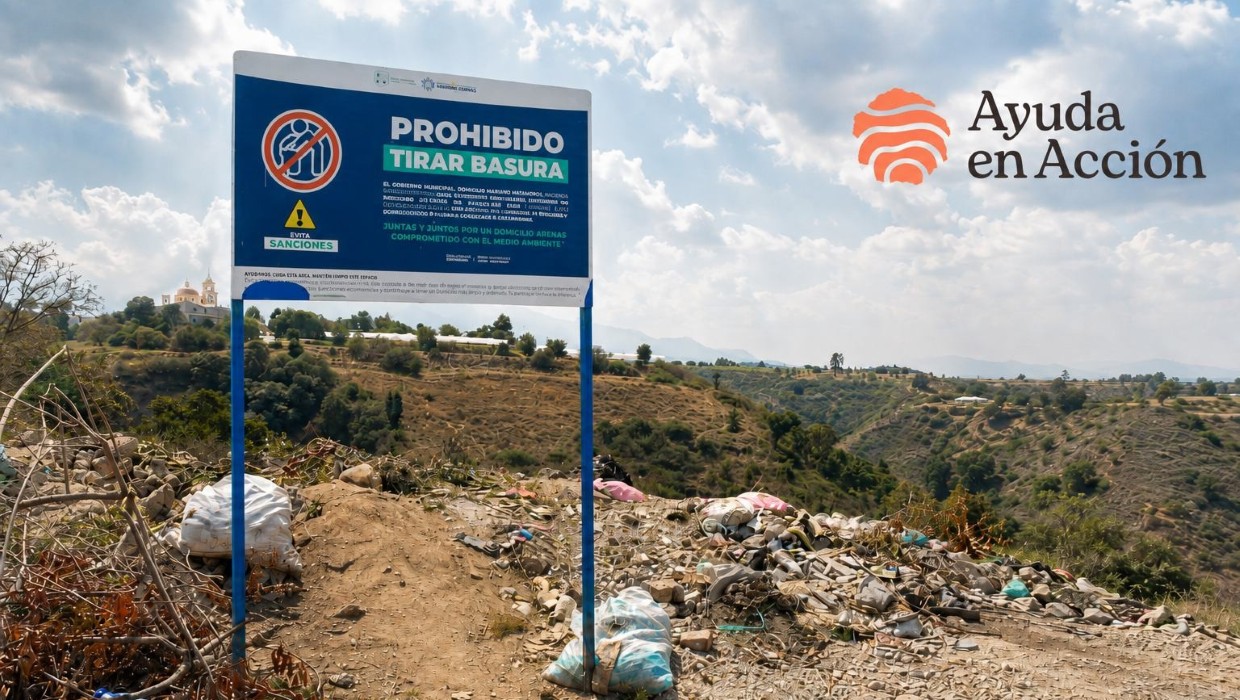
Although the municipal service partially recovers some materials, a significant amount continues to be mixed with other waste or ends up being burned or dumped in ravines, along roads, on vacant lots and in community spaces. This problem becomes more severe during local celebrations and festivities.
The main constraints are insufficient separation at source, a lack of collection points, logistical difficulties and the absence of stable channels for recovery, recycling and commercialization.
What We Are Looking For
The main objective is to develop innovative, frugal solutions adapted to the rural context that enable progress toward a community-based circular economy model in Domingo Arenas, connecting it, whenever possible, with other stakeholders and waste streams in the territory.
Participating individuals and teams may submit proposals for one or both of the following categories:
Category 1. Organic Waste
The solution should contribute to one or more of the following objectives:
1. Improve the collection, separation, sorting and storage of organic and food waste from households, producers, businesses and other local stakeholders.
2. Make use of pruning residues, discarded fruit, biomass and food waste.
3. Transform these materials into compost, vermicompost, bio-inputs, animal feed, energy or other value-added products, prioritizing simple alternatives adapted to the local context.
4. Reintegrate nutrients and organic matter into production systems.
5. Reduce dependence on external inputs.
6. Develop sustainable community-based models that connect different waste generators and stakeholders across the territory and enable the management, recovery and, when useful, simple traceability of organic waste.
Category 2. Inorganic Waste
The solution should contribute to one or more of the following objectives:
1. Reduce waste generation through responsible consumption practices.
2. Facilitate separation and sorting in households, schools and community spaces.
3. Design accessible, safe and easy-to-maintain collection points.
4. Improve the collection, storage, compaction or transportation of materials.
5. Establish collaboration channels with recyclers, companies or local enterprises.
6. Create new uses or products from recovered materials.
7. Generate social or economic incentives that encourage community participation.
Proposals may combine appropriate technologies, low-cost equipment, educational methodologies, digital tools, organizational models or local partnerships.
Particular value will be placed on solutions that recognize and coordinate the roles of women, producer families, young people, schools, community committees, businesses, recyclers and municipal authorities as key actors in their implementation and continuity.
Their potential for replication or scaling in other communities and with other actors in the system will also be valued.
It is not necessary to develop a completely new solution; adaptations or improvements to existing solutions that have proven effective in other contexts may also be proposed.
Detailed information on waste, local conditions and current practices will be available in:
· Annex 1. Management and Recovery of Organic, Agricultural and Livestock Waste.
· Annex 2. Management and Recovery of Recyclable Inorganic Waste.
Deliverables
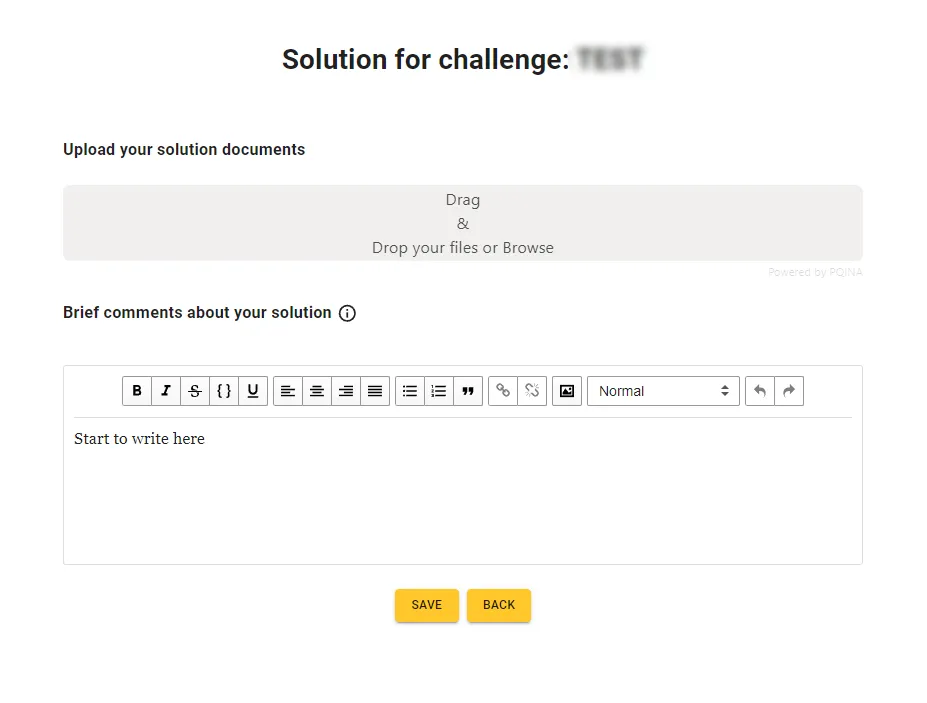
Proposals must be submitted in a PDF document with a recommended maximum length of 10 pages, including:
1. Category under which the proposal is submitted: organic waste, inorganic waste, or both.
2. General description of the solution and how it works.
3. Users and stakeholders who would participate in its management.
4. Equipment, materials, infrastructure or resources required.
5. Collection, treatment, transformation, recovery or commercialization model.
6. Implementation plan, including activities and timeline.
7. Estimate of investment and operating and maintenance costs.
8. Expected environmental, social and economic results.
9. Strategy for community participation, ownership and sustainability.
10. Team experience and, where available, evidence or similar success cases.
In addition, photographs, diagrams, designs, videos, spreadsheets or other supporting documents may be submitted in a ZIP file.
All requested deliverables must be included for the proposal to be properly evaluated.
Evaluation Criteria
Proposals will be evaluated according to the following criteria:
1. Social impact and human-centered approach
Generates visible benefits for families, producers and the community.
2. Adaptation to the local context
Uses resources, capacities and stakeholders available in the territory.
3. Simplicity
Is easy to implement, use and maintain.
4. Environmental impact
Helps reduce pollution and improve waste recovery and use.
5. Economic feasibility
Has costs that are affordable for families and the municipality.
These criteria will apply to both organic waste and inorganic waste proposals.
Structure and Timeline
This is a single-round challenge, with the following deadlines:
· Deadline for proposal submissions: October 15, 2026.
· Evaluation period: 6 weeks.
Finalist teams may be invited to a meeting to present and defend their proposal.
One winning solution may be selected in each category. The same individual or team may participate in both categories, provided they submit a sufficiently developed response for each type of waste.
-------------------- Particular Terms & Conditions ----------------------------
Confidentiality
N/A.
Intellectual Property
You understand, acknowledge and agree that Ayuda en Acción and, where applicable, the Challenger that created the challenge will have access to your solution.
You also understand, acknowledge and agree that other solvers may create or may already have created content similar or identical to your solution in terms of concept, subject matter, idea, format or other aspects.
If a solution is identical or similar to that of another solver, Ayuda en Acción or, where applicable, the Challenger reserves the right, at its discretion, to award a higher score to one of the solutions in accordance with the challenge terms, or to randomly select one solution from among those that meet the challenge conditions.
By participating in the challenge, and if your solution is selected as the winner, you agree that:
- If you propose a solution that has already been patented or otherwise protected, you will retain its intellectual property rights. Ayuda en Acción and, where applicable, the Challenger will only have the usage rights necessary for this specific project, from its publication as a challenge through any potential pilot and scaling phases.
- If the challenge results in a new solution or technological application with intellectual property rights, the winning individual or team will exclusively assign those rights to Ayuda en Acción and, where applicable, the Challenger, for the purpose of using it in social-purpose projects of their own or of third parties.
This assignment will be unlimited in both time and territory. At all times, Ayuda en Acción will recognize the moral rights of the authors, giving them appropriate credit for their solution and visibility.
Participation in the challenge implies acceptance of the ennomotive platform’s general terms and conditions.
Prizes
Two separate prizes are offered:
· €1,800 for the best proposal for the management and recovery of organic waste.
· €1,800 for the best proposal for the management and recovery of inorganic waste.
The prizes constitute compensation for the selected proposals and do not have to be allocated to carrying out a pilot or implementing the solution.
Any subsequent testing, prototyping or field activities will be evaluated independently and will be subject to specific agreements that may be established with Ayuda en Acción and local stakeholders.
Ayuda en Acción reserves the right not to award a prize in either category if no proposal meets the minimum evaluation criteria.